
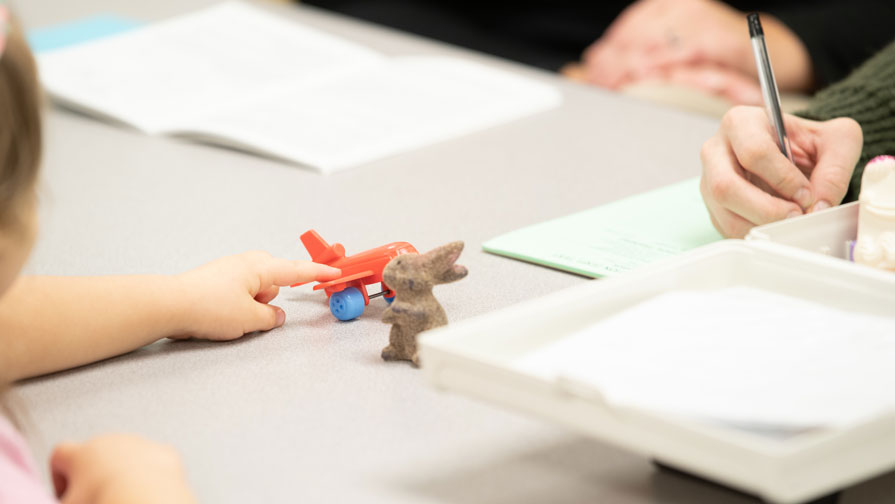
Behavioral intervention, or “applied behavioral analysis,” teaches people with autism new and adaptive skills. This helps them to better work within the world around them.
Dr. Jordan Belisle, assistant professor of psychology at Missouri State University, and applied behavior analysis faculty and students, research how behavioral intervention can improve lives.
Teaching to adapt
People with autism, especially children, often exhibit self-injurious behavior in addition to deficits in their language and cognitive skills.
Behavioral intervention involves understanding why a person engages in certain behaviors, or responds a certain way, and then teaches replacement skills.
“Behavioral intervention is not about ‘fixing’ autism or ‘solving a puzzle,’ but it is about teaching children and their families new skills that can move them toward the life they value,” Belisle said.
Focusing on the individual, not groups
Autism affects each person differently.
People who are more severely impacted may be unable to communicate wants and needs. Others may not know how to adapt within their disability.
Teaching adaptive skills is important in more ways than one.
“Rates of depression, anxiety and suicide are very high in adolescents who are less severely impacted, so a lot of our work is centered on teaching people to be flexible in their environment,” Belisle said.
Behavioral intervention and medicine are currently the only two treatment models that are considered “evidence-based” treatment.
Belisle says a training model should consider medical and behavioral factors that contribute to the challenges individuals face.
“When we focus on these challenges at the individual level, we often achieve successful outcomes,” Belisle said.
Love of learning
A main goal of behavioral intervention is teaching new skills by using positive reward-based strategies, and teaching how to adapt despite life’s challenges.
“More than anything, the goal is to establish a love of learning,” Belisle said. “Our goal is to reward learning so it can happen naturally in any context.”
Discover more from News
Subscribe to get the latest posts sent to your email.