
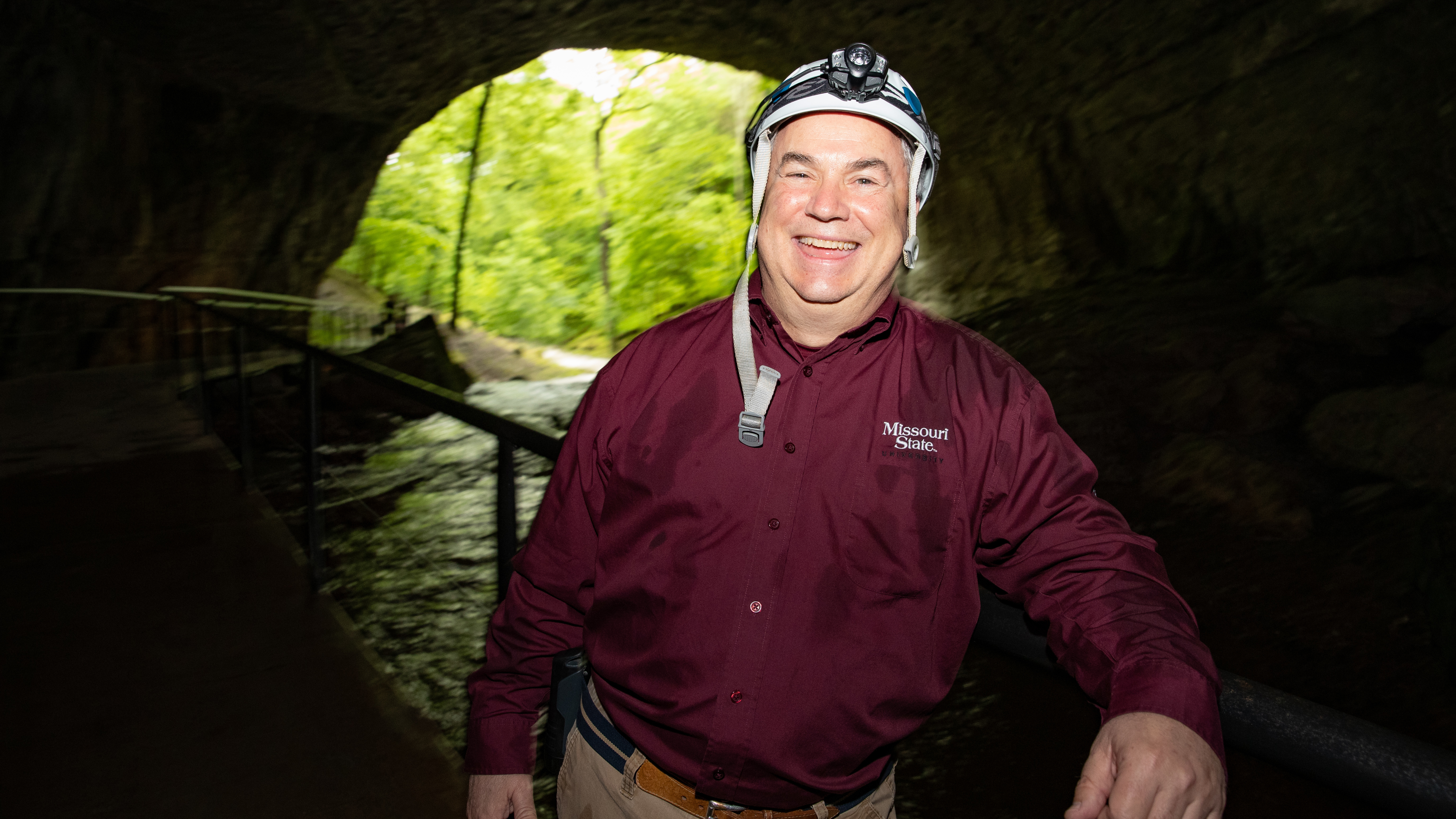
If you lived on top of a sinkhole, would you want to know?
“When a house falls into a sinkhole, neighbors clamor for information. They ask if their house is next,” said Dr. Doug Gouzie, geology professor at Missouri State University. “It’s unimaginable and devastating, but I think they might not really want the answer to that question.”
Gouzie studies land formations, like sinkholes, and how water forms them.
“Your house being built on a plot of land doesn’t create a sinkhole. It’s not the weight of a structure,” he said. “The right conditions must already exist underneath the ground.”
Roots often spread out to gather water. If roots fight their way through cracks in the underground rocks to find a reliable source, there might be a problem.
“If a tree happens to find a crack that leads them to a cave passage with a stream, that makes them happy. Then they grow better,” he said.
Colorful streams
Along with his graduate students, Gouzie spends many hours in caves across Missouri and on stream banks collecting water and sediment.
“Nature gives us the results that will help us predict what sinkholes or drainage areas are connected with which cave or spring underground,” he said.
One way they determine this is by placing dye in the streams – detectable by black light but not the human eye. Using an instrument with a very sensitive electric eye, the team can trace the dye’s path, even when the spring meanders underground.
Soil stories
The appearance of the soil in your yard can tell a story, too. If you see areas with lighter soil while other areas stay a richer brown, something may be amiss. The lighter area may indicate the water has dissolved lime. Instead, the water is moving somewhere deeper.
“If I know where the landscape is draining into – where it’s going underground,” Gouzie said, “then I know where it’s washing the soil away. That’s where I’m going to find the next sinkhole.”
Discover more from News
Subscribe to get the latest posts sent to your email.