
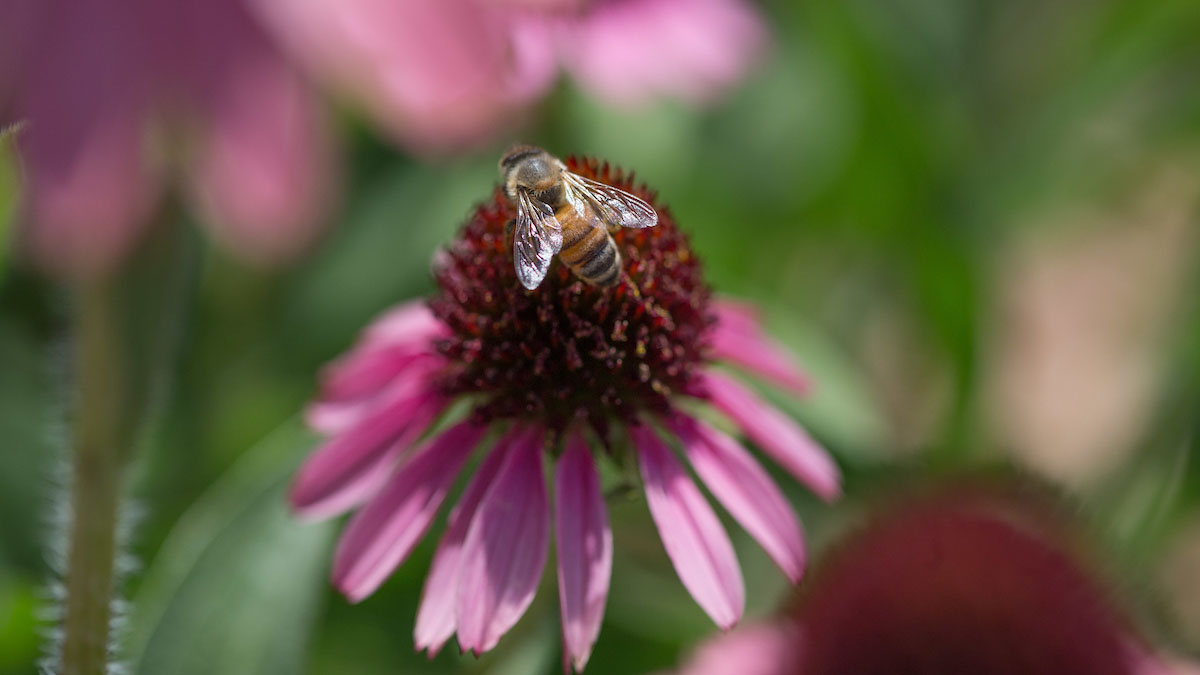
When you hear the word “bug” you might think of a creepy, crawly critter that does more harm than good. Unfortunately, this misconception creates problems for the many insects which do good, including pollinators like butterflies and bees.
“Most kinds of flowering plants are completely dependent on pollination by insects to produce fruit and seeds,” said Dr. Chris Barnhart, distinguished professor of biology at Missouri State University.
“Overuse and unnecessary use of pesticides damages beneficial insect populations and potentially harms human health as well. Besides being beautiful and useful pollinators, insects are essential food for birds and other animals, which people are more inclined to appreciate.”
Dispelling myth
Barnhart is the volunteer curator of the Bill Roston Native Butterfly House at the Springfield Botanical Center. From May to October, volunteers maintain a net house containing plants and native butterflies and moths in all of their life stages.
“One of our central messages at the Butterfly House and the Botanical Center is the importance of insects in the balance of nature,” said Barnhart. “There are many insects that we should welcome and cooperate with as opposed to combatting them.”
Helping butterflies flourish
Butterflies hibernate during the cold months and emerge when temperatures and day length rise in the spring. Some butterflies overwinter further south and migrate north in during this time of year. Both types of butterflies have already been spotted earlier than usual thanks to a mild winter.
“Butterflies are attracted to flowers that provide nectar. But to grow butterflies, we must plant the native host plants, the ones that are food for the caterpillar stage,” said Barnhart. “Each kind of butterfly has particular native host plants that its caterpillars can eat. In that way we produce not only butterflies, but essential bird food as well.”
There are extensive online resources for those interested in helping grow the local butterfly population:
- The Friends of the Garden volunteer group hosts events including native plant sales, programs and volunteer opportunities.
- The Bringing Nature Home website discusses gardening for natural value.
- The Missouri Extension office at the Botanical Center provides practical advice and resources related to insects for gardeners and home owners.
- The Journey North tracks the monarch and bird migrations and other seasonal happenings.
Volunteer training for the Roston Butterfly House is April 22 and 26, with opening day May 12. The 2017 annual Butterfly Festival will be held June 14. For more information on the Roston Butterfly House or to volunteer, contact the Friends of the Garden at 417-874-2952.
For more information, contact Barnhart at 417-836-5166.
Discover more from News
Subscribe to get the latest posts sent to your email.