
Diamonds are not all created equal. It’s why we have scales to measure carat, cut, color and clarity. Why are diamonds so different? Dr. Gary Michelfelder is ready to dig deep and find out.
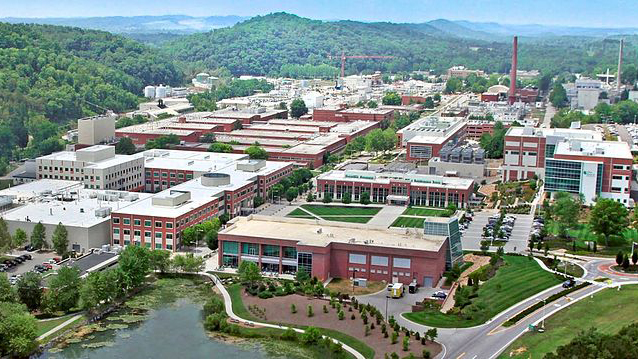
Michelfelder, assistant professor of geography, geology and planning at Missouri State University, and graduate student Tyler Sundell will examine diamonds and their features at Oak Ridge National Laboratory in Tennessee starting Aug. 1.
By comparing diamonds from the Northwest Territories in Canada and Crater Diamond State Park in Arkansas, they can see environmental and age differences in each diamond.
What Michelfelder is trying to accomplish is twofold – he wants to find a way to measure isotopic ratios in a less expensive way and find out how the earth has evolved over time. Tracking the carbon isotope values can show changes in pressure and chemical conditions of the mantle, which helps him achieve his goals.
What does that have to do with diamonds?
“Diamonds are the only mineral that comes directly from the Earth’s mantle, and therefore the minerals that are trapped in the diamonds are the only minerals that provide any information about the chemistry, pressure and temperature of the Earth’s mantle,” Michelfelder said.
The funding for Michelfelder’s research gives him access to the User Nanoscience Research Program at the Center for Nanophase Materials Sciences at Oak Ridge Laboratory and during that time, unlimited access to the Time of Flight Secondary Ionization Mass Spectrometer (ToF SIMS).
The ToF SIMS measures the mass of atoms to calculate isotopic ratios or abundance of an element. Basically, it’s like bowling on an interstate.
The first step is when an atom gun shoots ions at the diamonds. The ions, which are atoms without an electron, act like a bowling ball hitting the pins. They hit the diamond, and some of its atoms fall off and go into the flight tube. The flight tube is like an interstate for atoms. Based on speed, the flight tube shows the lighter and heavier atoms, giving their mass.
Michelfelder has access to the Tof SIMS for six days. It will run 24 hours a day, taking five to seven minutes to analyze each sample. This means Michelfelder will have 1,000 or more analyses to go through when the six days are over.
“This will be a very large dataset that will take many years to fully understand,” he said.
For more information, contact Michelfelder at 417-836-3171.
Dig up a degree with the College of Natural and Applied Sciences
Discover more from News
Subscribe to get the latest posts sent to your email.